The Myth of Deep Beliefs: Leading in a World of Improvisation with Nick Chater
February 12, 2026
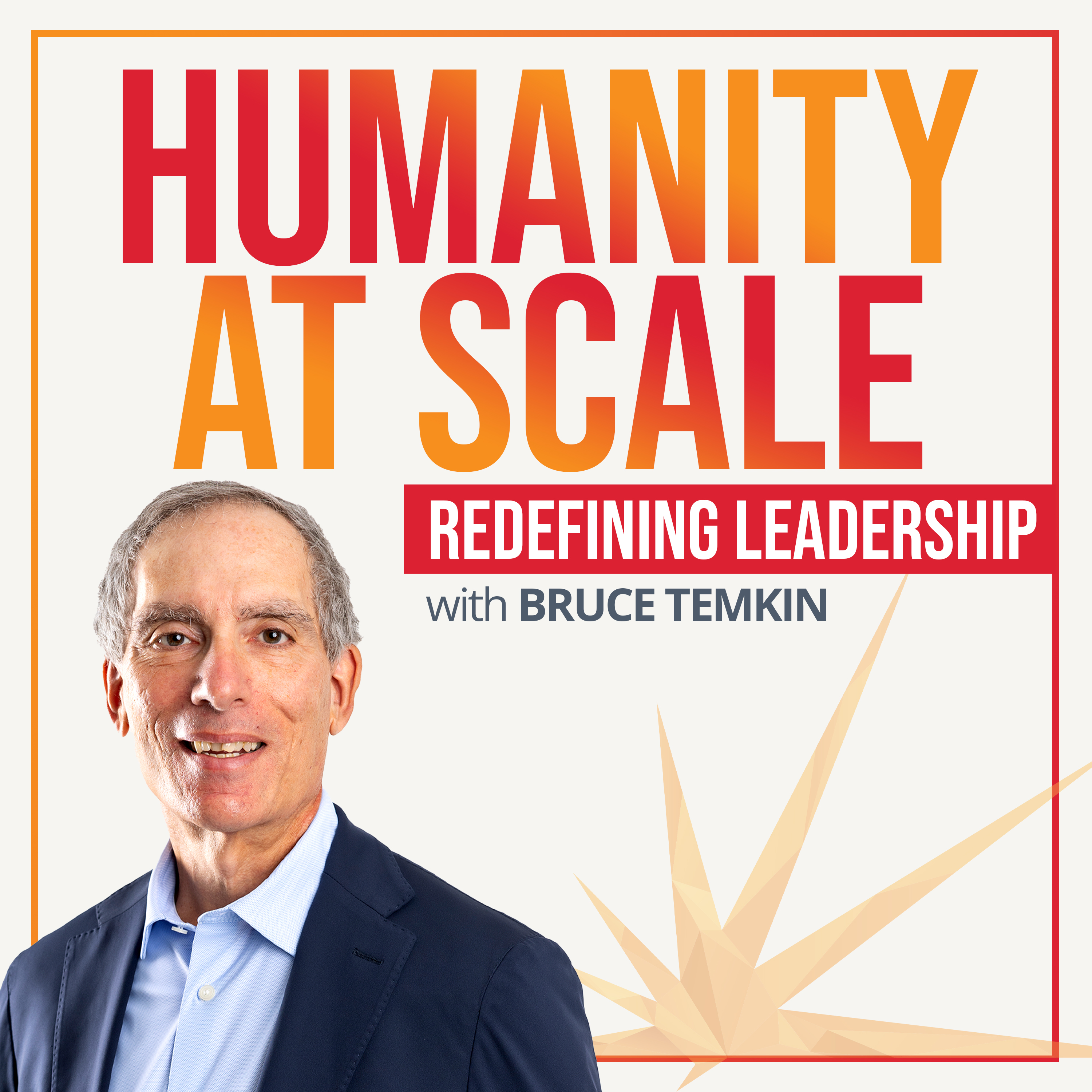
What if your mind isn’t a warehouse of beliefs, but a live improvisation happening moment to moment?
In this episode of Humanity at Scale, host Bruce Temkin speaks with Nick Chater, Professor of Behavioral Science at Warwick Business School, about why human preferences are constructed on the fly, and what that means for leadership. Drawing on ideas from The Mind Is Flat, Chater challenges fixed models of motivation, engagement, and culture. The conversation reframes leadership as direction-setting rather than belief-installation, explains why surveys reveal context, not truth, and shows how shared norms outperform rigid rules. A sharp, liberating rethink of how humans and organizations actually work.
What if your mind isn’t a warehouse of beliefs, but a live improvisation happening moment to moment?
In this episode of Humanity at Scale, host Bruce Temkin speaks with Nick Chater, Professor of Behavioral Science at Warwick Business School, about why human preferences are constructed on the fly, and what that means for leadership. Drawing on ideas from The Mind Is Flat, Chater challenges fixed models of motivation, engagement, and culture. The conversation reframes leadership as direction-setting rather than belief-installation, explains why surveys reveal context, not truth, and shows how shared norms outperform rigid rules. A sharp, liberating rethink of how humans and organizations actually work.
Here are some of the topics that Bruce and Nick explore:
- How to stop treating preferences as fixed and start recognizing them as constructed in the moment
- Why engagement surveys and values assessments reveal only surface-level signals
- The director-not-dictator leadership model
- How to use small, contextual leadership moments to embed direction into real decisions
- Why do merger failures and cultural clashes stem from conflicting unspoken norms
- The competitive advantage of human flexibility: why humans will remain essential in organizations
Nick Chater is a Professor of Behavioral Science at Warwick Business School and a leading authority on human decision-making and rationality. With a background spanning psychology, philosophy, and behavioral economics, Nick challenges conventional assumptions about how the human mind works. He is the author of *The Mind is Flat*, which dismantles the myth of deep, stable beliefs and preferences, and co-author of *The Language Game* (with Morten Christiansen) on how humans improvise language and social conventions. His research on choice blindness, preference reversals, and collective decision-making has transformed how we understand cognition, culture, and organizational behavior.
Episode Resources:
- Nick Chater at Warwick Business School
- Warwick Business School Website
- Bruce Temkin on LinkedIn
- Humanity at Scale on Apple Podcasts
- Humanity at Scale on Spotify
- Humanity at Scale on YouTube
Humanity At Scale: Redefining Leadership is handcrafted by our friends over at: fame.so